
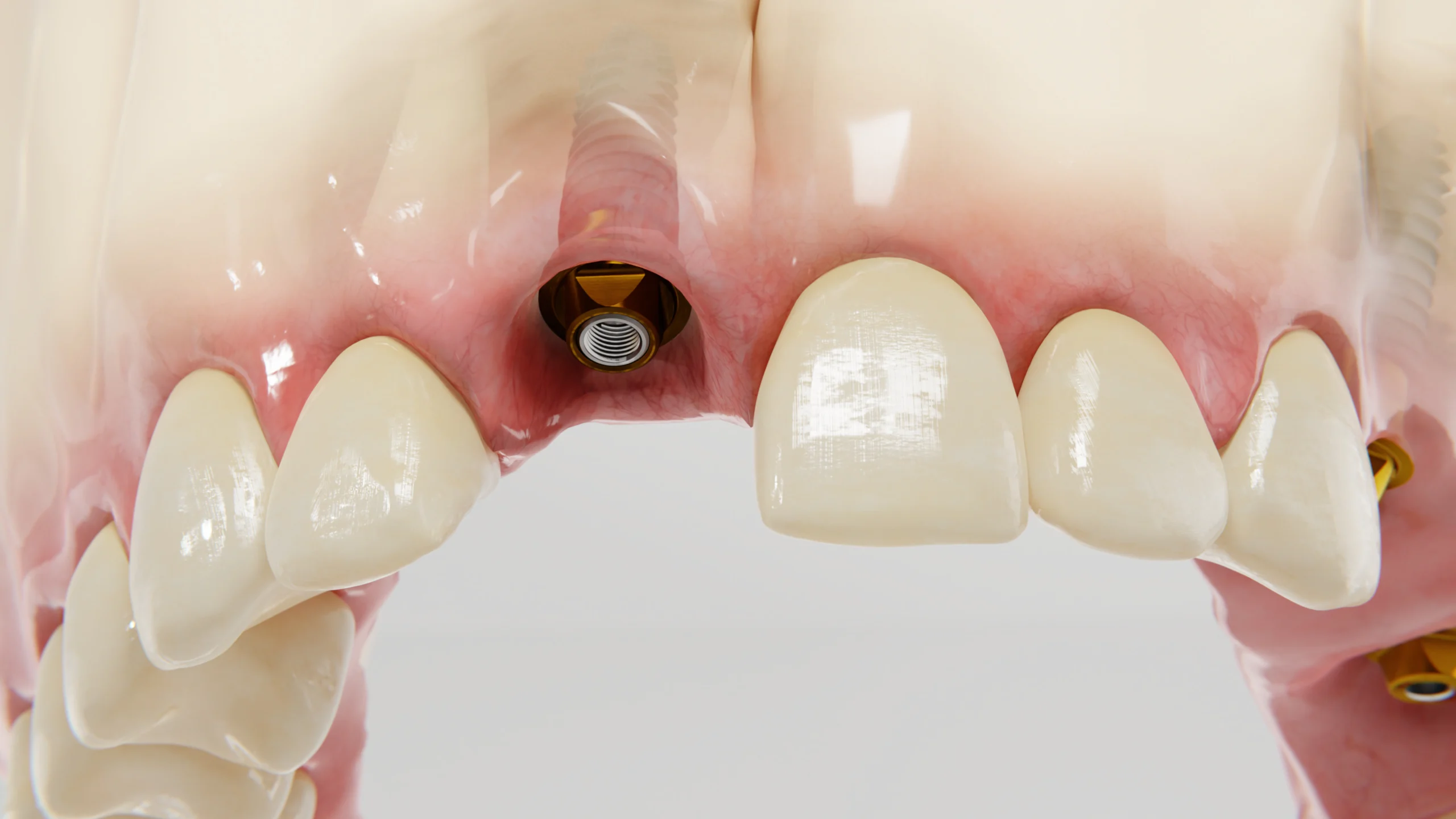
An implant replaces a missing tooth from the root up, and the treatment has three parts, including:
Because the post sits in bone, it stimulates the jaw like a natural root, which helps slow the bone loss that follows an extraction. The finished result behaves much like a natural tooth: you chew with it, brush it, and floss around it, and because it anchors in bone rather than clasping to neighboring teeth, it does not require grinding down healthy teeth the way a traditional bridge does.
A surgeon who comes to our office performs the surgical portion, including extractions, bone grafting, and certain sinus lifts when the upper jaw needs more bone to work with. Having a surgeon travel here means you don’t have to go across the Valley for surgery and then return for restoration, and both halves of your treatment stay in one chart.
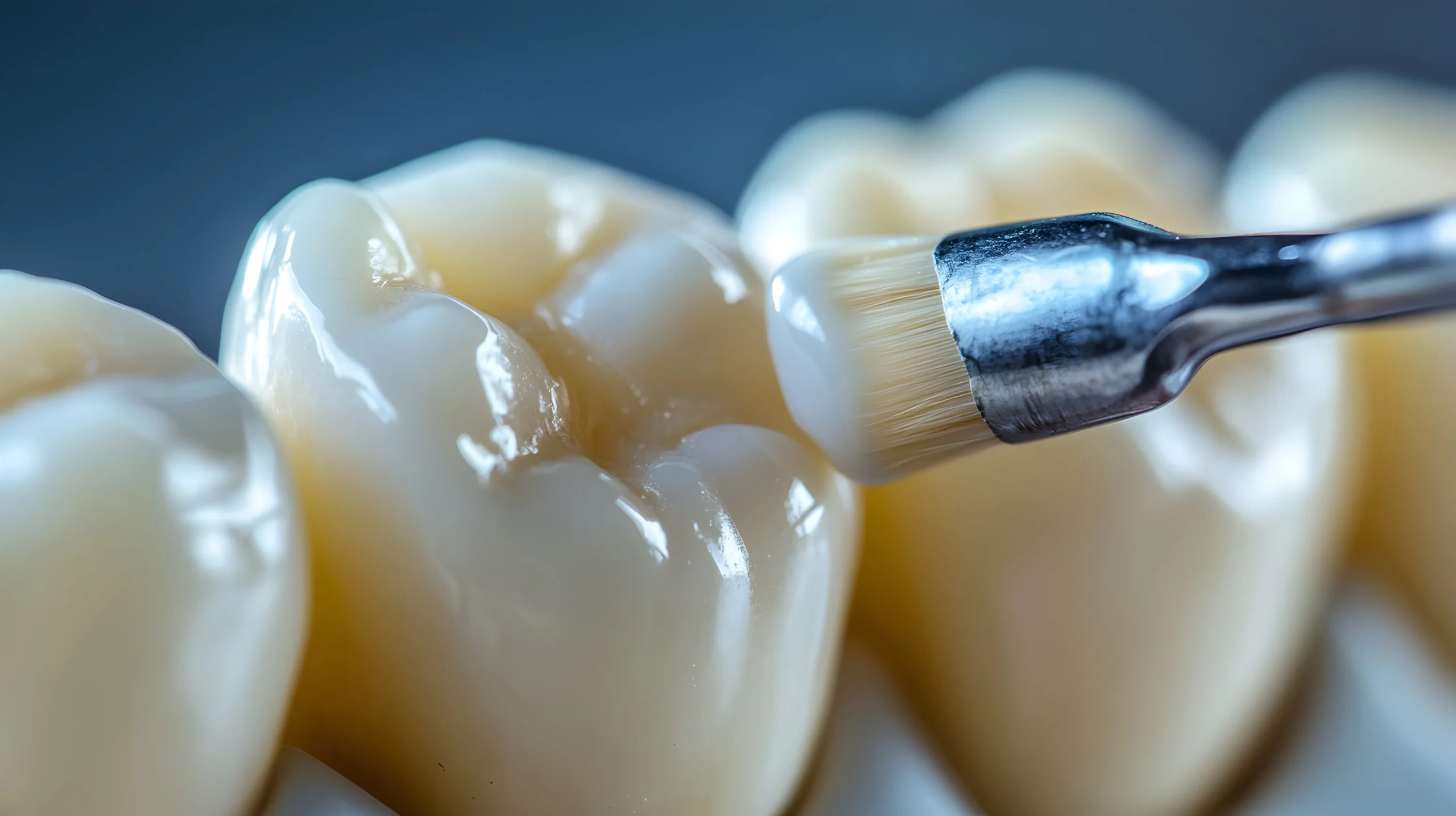
Dr. Virdee handles the restorative side. She designs and places the crown, bridge, or full-arch prosthesis, matching the shape and shade of the adjacent teeth. She also restores all-on-X cases, where several implants support a full arch of teeth rather than one per tooth.
Implants have one of the best track records in dentistry. A 2024 meta-analysis in Clinical Oral Investigations examining 20-year outcomes found survival rates of roughly 88% across retrospective studies, and the authors emphasized that follow-up care matters well beyond the first decade.
That last point is the one patients underestimate. An implant cannot decay, but the gum and bone around it can become infected if plaque accumulates, and that infection can cost you the implant. Daily cleaning and regular exams and cleanings protect the investment. Smoking and uncontrolled diabetes also raise the risk of failure, which is worth discussing honestly before treatment begins.
Let’s talk about your smile. Our team can help you plan your next step.
Implant treatment prompts a predictable set of questions, and these are the ones we hear most often.
It takes longer than most patients expect because the bone needs months to fuse to the post before the final tooth goes on. Extractions or grafting add time at the front end. You are not left without a tooth in the meantime, and we discuss temporary options at your consultation.
The surgical placement is done under anesthesia, and most patients compare the recovery to an extraction rather than something worse. Soreness in the days afterward is normal and manageable, and your surgeon provides specific aftercare instructions.
Possibly, though bone tends to thin in an empty socket over time, so grafting may be needed first. An exam with imaging answers the question properly, and our office uses CBCT scanning to assess the bone before anything is planned.
If this is the first time you have visited our Scottsdale office, the mapping service below will assist you in finding our location.
Simply fill out the form below, and you will be presented with directions that include a map, the travel time, and distance. If you need any additional information, please contact us at Pure Smiles Phone Number (480) 585-1612.